ClayWave
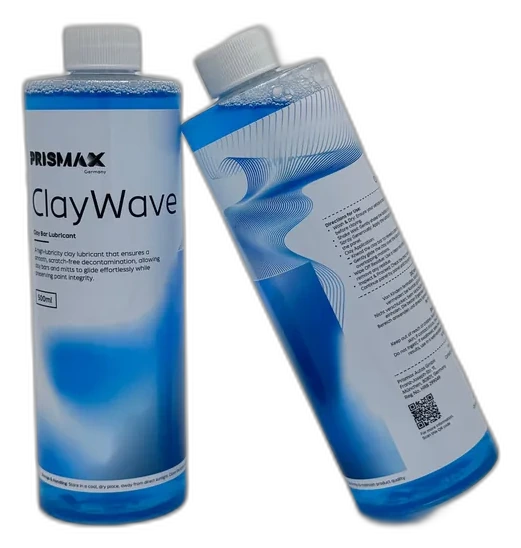
Engineered benefits
True glide
A high-lubricity film lets clay float over paint instead of grabbing and hopping.
Marring insurance
Keeps lifted contaminants suspended so they slide off rather than scratch.
Works with any clay
Pairs with bars, mitts and towels, including the Prismax ClayMitt.
Residue-free
Wipes clean without oils, leaving paint genuinely bare for coating or wax.
Glass and trim too
Clay headlights, glass and gloss trim with the same bottle.
Generous coverage
A fine mist is all a panel needs, one bottle decontaminates multiple cars.
Application protocol
Wash first
Clay only a clean car, decontamination comes after shampoo, never instead of it.
Mist generously
Spray a wet film over a half-panel. Dry clay on dry paint is what causes marring.
Glide the clay
Move in straight lines with light pressure until the surface feels glass-smooth.
Wipe and move on
Buff the residue with a microfibre, re-mist and continue to the next section.
Technical data
Field questions
Suds break down quickly under clay and let it grab. A dedicated lubricant keeps a consistent slip film so the clay never touches dry paint.
Two to three times a year for most cars, or whenever paint feels rough after washing, and always before coating or waxing.
Yes, the process strips whatever sits on the paint, which is why it is the standard prep before fresh protection.
No, it is water-based and oil-free. Wipe it off plastics as you go and nothing is left behind.
Launder microfibres normally after claying; the residue and lifted grit wash out.