3-in-1 Compound
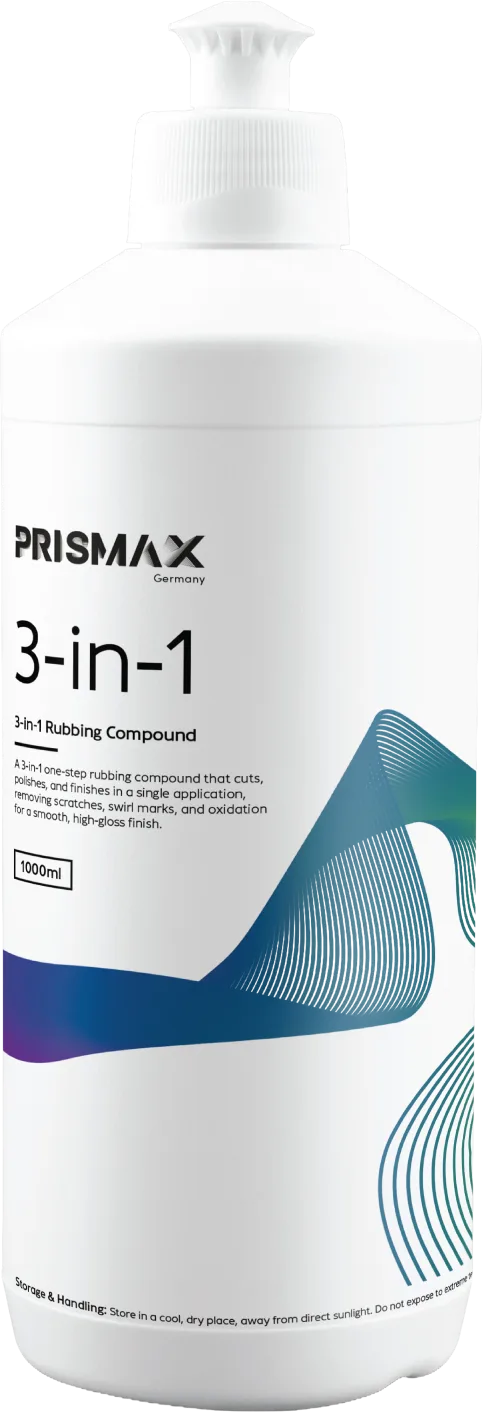
250 · 1000ml
Bottle sizes
1step
Cut · polish · protect
Machine& hand
Either method
01 /
Engineered benefits
B01
Cut, polish, protect
Removes imperfections while boosting gloss and adding a protective barrier.
B02
Time-saving formula
Achieves multi-stage results in one application.
B03
Versatile application
Suitable for both machine and hand use.
B04
One-step correction
Removes light scratches, swirl marks and oxidation in a single pass.
02 /
Application protocol
STEP 01
Test spot
Confirm the one-step covers the defect level.
STEP 02
Apply
Use a medium pad or apply by hand.
STEP 03
Work it in
Work full sets to let the abrasives finish.
STEP 04
Buff
Wipe clear; the panel is ready for protection.
03 /
Technical data
Type
One-step compound (cut + polish + protect)
Sizes
250 ml · 1000 ml
Removes
Light scratches · swirl marks · oxidation
Adds
A thin protective glaze barrier
Application
Machine or hand
04 /
Field questions
A multifunctional product that combines a mild cutting agent, a polishing enhancer and a protective glaze in a single step, removing light defects while boosting gloss.
Yes. It is suitable for both machine and hand use.
It leaves a thin protective barrier after correcting and polishing.